Property Finder
Click a country to show all resorts

Purchasing property in Austria

Please click a heading to go straight to that section

A Introduction  
B Where can I buy?  
C Who can buy?  
D Building construction guarantees  
E Tailor-made finishes to your chalet  
F Optional furniture packages  
G Purchase procedure  
H Purchase costs  
I Mortgages  
J Stage payments  
K Do you want to rent?  
L Tax advantages of buying a rental-property  
M Income tax  
N Capital gains tax  
O Inheritance tax  
P Service charges  


Click here to download this information as a PDF

Introduction
A – Introduction
Austria is a gateway between East and West Europe, and borders Switzerland, Liechtenstein, Germany, the Czech Republic, the Slovak Republic, Hungary, Slovenia and Italy.

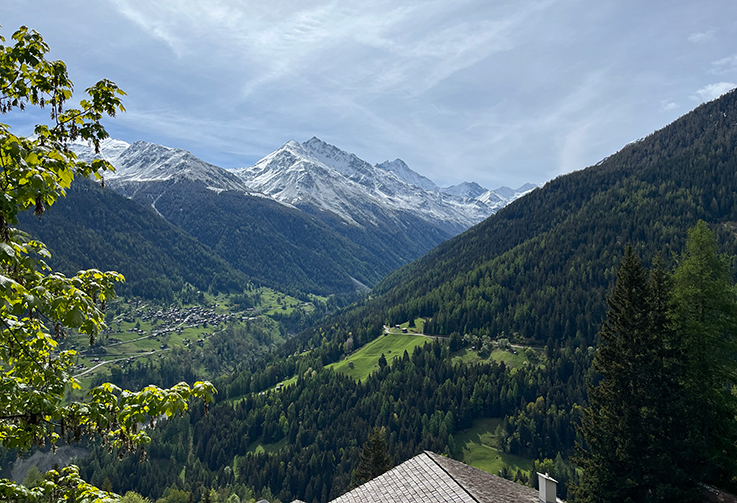
Austria is divided into nine Federal Provinces and benefits from a diverse landscape ranging from the Eastern Alps to the Bohemian Massif. This mountainous country is nearly half covered with forests and boasts freshwater lakes that are of drinking quality; because of its ideal location Austria makes a great base from which to explore the whole of Europe. The River Danube flows approximately 220 miles through Austria on its way from the Black Forest in southern Germany to the Black Sea and Austria’s highest mountain is Grossglockner (3798m).

For many, Austria has the perfect climate; warm summer days with temperatures around 25ºc to 35 ºc and sunny, chilly winters that hover around 0 ºc. The mountains are snow-covered in winter but warm and green in summer.

Where can I Buy?
B – Where can I buy?
Austria has been a member of the EU since 1995 and had historically imposed a number of restrictions on foreign property buyers, but now buying property in Austria is easier than ever.

All EU citizens can buy property in Austria; and it is also possible to buy in the name of a company if you wish to do so. Non EU citizens will need to apply for a foreigner purchase permit (also if they buy in a business name) but permits are not usually a problem to obtain.
C – Who can buy?
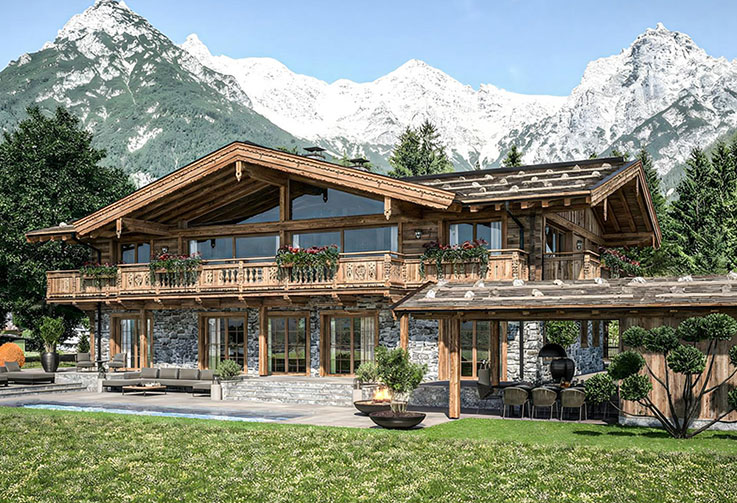
Although EU citizens are allowed to buy and live permanently in any house they wish, these rules do not apply to holiday homes. Each of Austria’s nine Federal Provinces is self governing with their own rules. For example, it is permitted to buy a holiday chalet in the Salzburg province but virtually impossible in the Tyrol. We are the only UK property agents to have property available in the Tyrol.

There are many other areas in Austria where you can buy more freely and which are much more reasonably priced. In the Salzburg region it is possible to buy a holiday chalet if you rent it out for part of the year and in the provinces of Carinthia and Styria it is even possible to buy a chalet with no restrictions whatsoever!

PBuilding construction guarantees
D – Building construction guarantees
All new build Austrian property is covered by a 30-year building guarantee against all building defects, and developers will usually guarantee building fixtures for two years.
E – Tailor-made finishes to your chalet
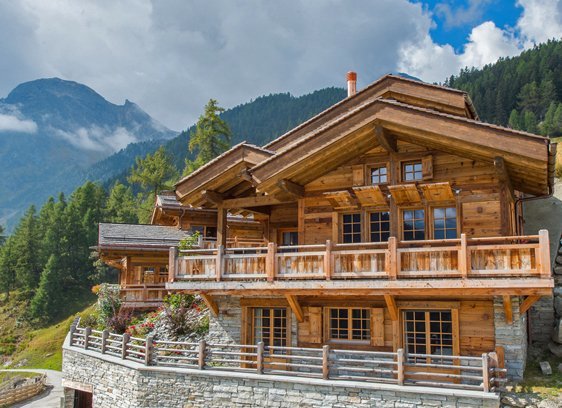
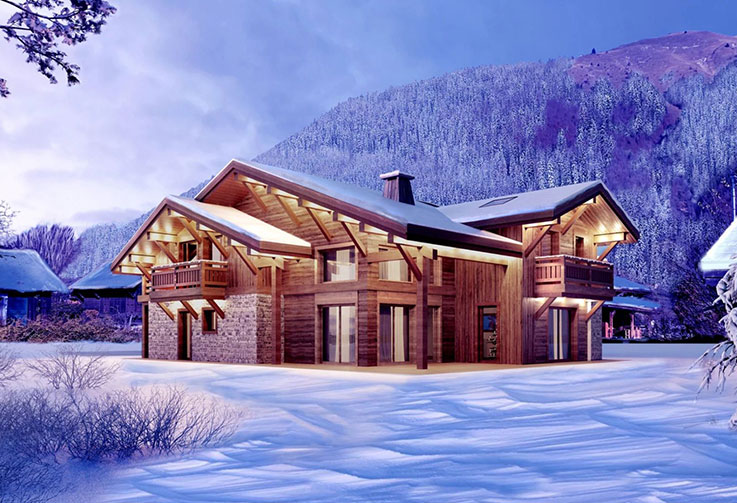
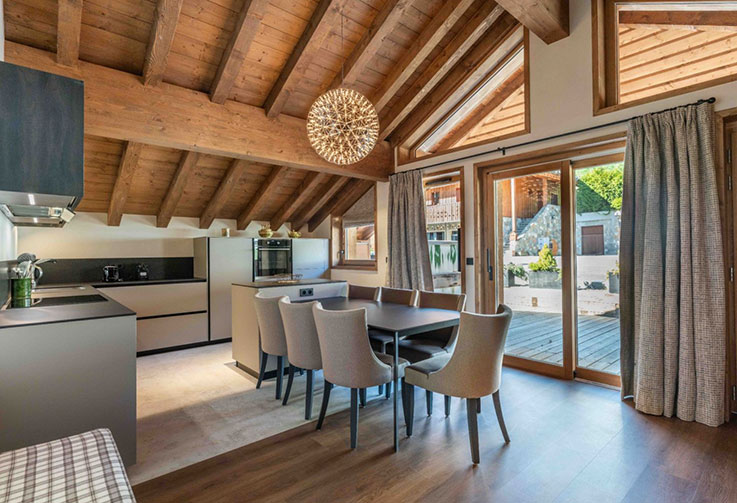
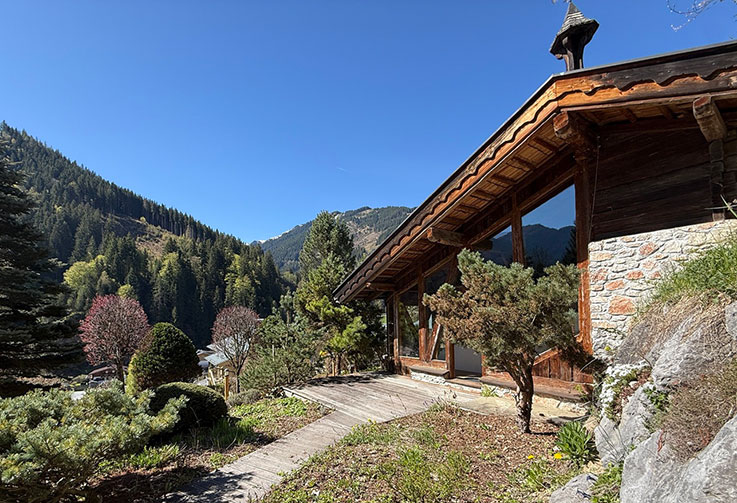
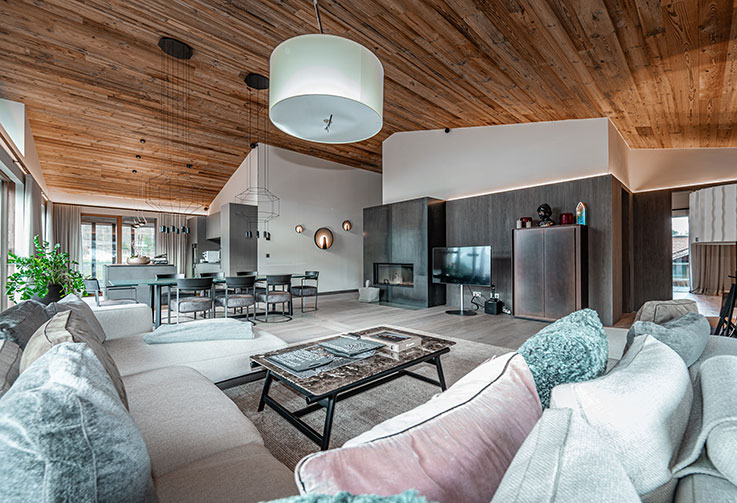
Most of our chalets and apartments are built either to-order or ‘unfitted’ enabling you to personalise your property with a tailor-made finish to your own specification which is included in the price. You can choose from an extensive range of kitchens, bathroom fittings, flooring, wall tiles, and lighting. etc

Optional furniture packages
F – Optional furniture packages
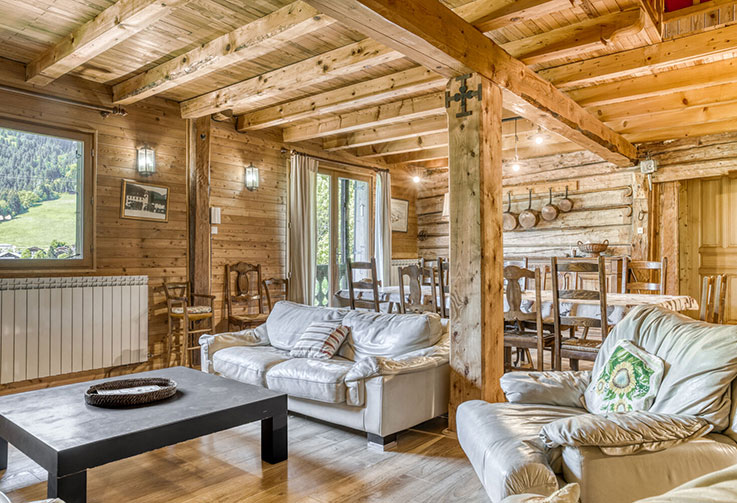
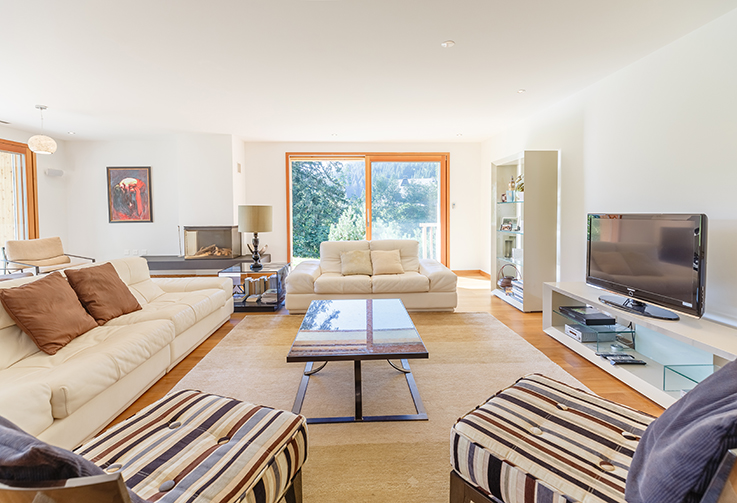
Optional furniture packages are also available to enable buyers to movie-in to their chalet with everything complete and in place. We work closely with developers and interior designers to provide every comfort for owners and have choices to suit every taste ranging from uber-cool modern furniture to romantic traditional designs; it is also possible to combine the two styles to create something modern with a traditional twist. These packages are extremely flexible and affordable and include everything you will need including sofas, wardrobes, beds, cutlery, crockery, and linen etc. Some chalets and apartments already include the cost of furniture packages in the price and some are sold separately (please see individual development brochures for full details) - Please note that although the cost of the furniture packages are included in many of the properties we sell, for mortgage purposes part of this cost must be deducted as banks will not lend on furniture. The cost of the furniture packages for apartments and chalets is usually between 12,000 euros and 20,000 euros.

Purchase procedure
G – Purchase procedure
In Austria a Notary, who is a semi-public official, will act on behalf of both the purchaser and the vendor. The notary will draw up the deed of sale and all the documents required to transfer the legal ownership and he has a duty to protect the interests of both parties When buying a property, both the purchaser and the vendor are required to attend at the notary’s office to sign the deed of sale in his presence. Alternatively both parties can sign a power of attorney authorising one of the secretaries working in the notary’s office to sign the sales deed on their behalf, in this case the buyer will receive from the notary a copy of the deed of sale in German and a professional English translation along with a power of attorney (also in English) which authorises the notary’s secretary to sign on their behalf. The buyer will need to take the power of attorney to a Notary Public (not a solicitor) in their country of residence to have their signature witnessed and (in the UK) the Notary Public will send the document off to the foreign office to have it ‘legalised’. This process usually takes several weeks, but can be fast-tracked for a small fee. - If preferred, buyers can hop on a plane and attend the notary’s office to sign in person!

Purchase Costs
H – Purchase Costs
Purchase costs for buying a property in Austria work out about 6% - 6.5% of the gross purchase price. The purchaser will be required to pay the notary fees after the contract of sale has been signed.

Fees are calculated as follows:

  • Purchase Tax (Stamp Duty) is 3.5% of purchase price
  • Registration in the Land Registry is 1%
  • Notary’s fees – between 1.5% - 2%
  • Court costs, administration fees – approximately 150 euros

Mortgages
I – Mortgages
Austrian banks will fund up to 70% of the purchase price and usually the loan period will be between 15 and 25 years. Some banks charge a set up fee and this is usually around 1.5% - 2% of the value of the loan. They will also charge an appraisal fee of 0.5% and you will need to pay the notary a fee of 1.5% of the amount of the mortgage to register the mortgage in the land registry. If required, it is possible to add all these mortgage related costs into your mortgage.

Variable interest rates are currently at around 3%, and brokers can also offer a 1-year fixed rate or 5-years fixed mortgages at very competitive rates. We have several mortgage brokers we can recommend, please contact us for further details.

Stage payments
J – Stage payments
Buying property in Austria is extremely secure. New build chalets and apartments are paid for in stages and all payments are made through the notary who acts as trustee for your money. The payments are made into a client account and the payments for each stage are only released to the developer from the client account when an independent government approved surveyor has been to inspect each stage and officially signed it off with the notary. This gives everyone security as the developer knows not to start building until the clients monies are in the notary’s client account and likewise the buyer knows that no monies will leave the account until works have been completed. When the buyer has made their decision to go ahead with their purchase, the payment procedure will typically be something like this:

  • 15% at start of building works
  • 35% on completion of the shell and roof
  • 20% on completion of plumbing and electrical Installations
  • 12% on completion of the façade & windows
  • 12% on completion of the property
  • 4% on hand over of keys
  • 2% after 3 years (or after Developer providing a bank guarantee or insurance to the purchaser)

Do you want to rent?
K – Do you want to rent?
Permissions and obligations for buying property in Austria vary from one project to another and we have chalets and apartments to suit all requirements.

Some of our developments have “second home” permission which means you can keep them as private residences with no obligation to rent at all. Other projects may be classified as a “holiday home” and therefore owners are allowed to spend up to six months a year in their chalet but no more and can rent them privately to friends and family if they wish. Other developments are classed as a “rental property” where owners are obliged to maximise their property’s rental potential. These chalets and apartments may have more restricted usage for owners but there are some big tax advantages to purchasing in this way. (Please see below for more details)

Austrian property has great rental potential for owners who are interested in making their chalet available to holiday-makers. The Austrian Alps offers two rental high-seasons in a year: Winter for skiing and summer for hiking, cycling and swimming in the warm lakes. The Alps have more tourists in the summer than in the winter.

The tourism industry in general forms an important part of Austria's economy accounting for almost 9% of its gross domestic product. Austria takes good care of its guests offering undoubtedly the best après ski in the world, and exciting alpine events virtually every week in the villages throughout the year. There are always exciting things to do or see for owners and their guests whether it is Polo in the snow in Kitzbühel, Jazz on the piste in Bad Gastein, Mozart evenings in Salzburg, or simply enjoying live music in a beer garden in the summertime. (Please be sure to see our Austrian Alpine diary for full events listings).

Tax advantages of buying a rental property
L – Tax advantages of buying a rental property
Buying a rental-property has great tax benefits which could save you up to 20% on the build cost of your property. To be eligible for this 20% tax discount on your purchase you would be expected to rent your chalet out for approx 130 - 150 days a year depending on which province you buy in.

To claim back the VAT you need to register for VAT and we will recommend a tax advisor to assist you with this. In some cases to claim the tax-back you may need to initially pay the gross price and then claim the tax back through your tax advisor (this usually takes 2 - 3 months), but in the vast majority of properties we sell this is not necessary as the developers will have pre-arranged everything for you so there will be no need to find the extra monies. (Please contact us or see specific developments for full information)

Depending on which property you buy, you can either use a large professionally managed tour operator who will efficiently handle all your rentals when you are not using your property and then pay you a quarterly income from the rental income. Or you can rent your property yourself with the help of a small local tour operator or perhaps also make your own web site, but you would handle the diary and marketing yourself. Whichever you decide we have lots of contacts and advice we can offer you.

Income tax
M – Income tax
If you decide to take advantage of the tax rebate and make your chalet a rental property you will be required to pay income tax on your rental income. You will be registered with the Tax Authorities for 10 years, but after this time you can de-register and will no longer be required to make annual tax returns. Much of these taxes can be offset, and there are a number of ways to reduce the tax you pay on your rental income. For example, the interest you pay on your mortgage can be written off against rental income; and you can also write off 10% of the costs of your furniture package as depreciation against your rental income.

In Austria, there is a 2,000 euro income tax exemption per person per year so if two people purchase a property together there is a tax free allowance of up to 4,000 euros per year. Any profit after deduction of the allowable expenses and tax exemption will be taxed at the following rates:

Profitable income of: 2,000 euros - 17,000 euros - 23%
Profitable income of: 17,000 euros - 43,000 euros - 33.5%
Any income earned above 43,000 euros is taxed at 50%

You will also need to charge VAT of 10% on your rentals. This can then be reclaimed each quarter upon the filing of accounts. We always recommend a choice of local tax advisors to help with your tax returns. The tax advisor will charge a one off fee to set up your registration (please contact advisors directly for prices) and annual tax returns will cost in the region of 300 – 500 euros per year.

Capital gains tax
N – Capital gains tax
The housing market in Austria has been subject to a number of controls in order to keep house prices within reach of locals, especially in the tourist areas. For example, a Capital Gains Tax of up to 50% applies to any profits you make on your property if you sell within 10 years (this is on a sliding-scale) but after 10 years there is no capital gains tax to pay.
O – Inheritance tax
The previously low inheritance tax of only 4% has now been reduced to 0% for next-of-kin and relatives.
P – Service charges
The total expenses of a development of chalets or an apartment building are divided up proportionately between the owners, according to the size of their property. These expenses include, structural insurance, various taxes, gardening, maintenance of roads (inc. snow clearing), refuse collection, and administration fees. It also includes the cost of water, electricity and heating for the communal areas. These are payable quarterly, half yearly, or yearly. As a rule of thumb annual expenses for an apartment in a typical ski resort, including all local property taxes and service charges, are somewhere in the region of 100 euros per m2.

Austria has both wonderful cities of culture and some of the most beautiful natural scenery in the world – a quote from Lonely Planet "possibly the best combination of nature and culture on the planet".